
Understanding the Bible

What Is the Bible?A Beginner’s Guide to Reading It

Not sure where you’d even start? This page is for you. No church background needed, and you don’t have to believe anything to read on.

The Bible is the best-selling book in history.

Just about all of us have opinions about it, but a lot of us hold those opinions without ever having turned a page — which is fair enough, because from the outside it looks like a giant, intimidating brick of tiny text and strange names.

So let’s take the pressure off. This page explains, in plain English, what the Bible actually is, where it came from, whether you can trust it, as well as how to pick one up and read it without giving up in week two.

The Bible is not a book. It’s a library.

The Bible isn’t a book, as such. It’s a collection of books. There are 66 books in the version of the Bible most Protestant churches (like Crowd) use, all bound into one volume.

66
books
~40
different writers
1,500
years, roughly
3
continents
3
languages
All 66, on one shelf
Old Testament · 39
Genesis
Exodus
Leviticus
Numbers
Deuteronomy
Joshua
Judges
Ruth
1 Samuel
2 Samuel
1 Kings
2 Kings
1 Chronicles
2 Chronicles
Ezra
Nehemiah
Esther
Job
Psalms
Proverbs
Ecclesiastes
Song of Songs
Isaiah
Jeremiah
Lamentations
Ezekiel
Daniel
Hosea
Joel
Amos
Obadiah
Jonah
Micah
Nahum
Habakkuk
Zephaniah
Haggai
Zechariah
Malachi
New Testament · 27
Matthew
Mark
Luke
John
Acts
Romans
1 Corinthians
2 Corinthians
Galatians
Ephesians
Philippians
Colossians
1 Thessalonians
2 Thessalonians
1 Timothy
2 Timothy
Titus
Philemon
Hebrews
James
1 Peter
2 Peter
1 John
2 John
3 John
Jude
Revelation
Hover over a book
Or tap one. Each spine is a separate book.
Old Testament
New Testament

Those 66 books were written by around 40 different people, from wildly different walks of life, over a period of more than a thousand years (often summarised as roughly 1,500). The writers included kings, a shepherd, a doctor, fishermen, a tax collector, prophets, and a man who even persecuted the Christian church in the early days. They wrote on three continents, in three languages, and most of them never met each other, as many were born centuries apart.

That’s important, because it changes how you read the Bible. You wouldn’t read a book of poetry the same way you read a history textbook or a letter from a friend. The Bible has all of those styles inside it.

A quick note on the “66”

Different Christian traditions count slightly differently. Catholic Bibles include seven extra Old Testament books (73 in total); Orthodox Bibles include a few more again.

The New Testament, which is 27 books about Jesus and the early church, is identical across all of them.

The Old Testament and New Testament.

Open a Bible and you’ll find it splits into two parts — the Old Testament and the New Testament.

39
The Old Testament

The older, larger part. It’s the story of God and the people of Israel, written before Jesus. The books are a mixture of history, law, poetry, and even the words of the prophets.

Jesus
27
The New Testament

The shorter, later part. It’s the life and teaching of Jesus, and the story of the movement that followed his resurrection.

The hinge between the Old Testament and New Testament is Jesus. Everything before points forward to him; everything after looks back at him.

If the Bible were a film, Jesus is the scene the whole plot turns on — as well as being the whole arc of the story.

Who wrote it? And what does “inspired” mean?

Who wrote the Bible?

Known with confidence

For some books, we know the author with real confidence.

Traditional name, debated

Like the four Gospels, which were written without their authors’ names on them. The names Matthew, Mark, Luke and John were attached a little later.

Simply anonymous

A few books, like Hebrews (in the New Testament), are simply anonymous — and the early church already knew they didn’t know who wrote it.

What does “inspired” mean?

“All Scripture is God-breathed and is useful for teaching, rebuking, correcting and training in righteousness, so that the servant of God may be thoroughly equipped for every good work.”

2 Timothy 3:16–17 · NIV

When Christians call the Bible “inspired”, they don’t usually mean it was dictated word-for-word from the sky. They mean they believe God worked through these human authors, including their personalities, their styles and their circumstances, so that what came out carries God’s voice as well as theirs.

You don’t have to accept that to read the Bible and get a lot from it. But it’s why Christians treat it as more than an interesting old text.

So here at Crowd, we think the Bible is the inspired Word of God.

Can you actually trust the Bible?

This is the big one — perhaps one of the biggest questions about the Bible. So let’s break it down by looking at three key questions.

01

Has the text been changed over the centuries?

This is a fair concern. It was copied by hand for over a thousand years before printing existed, so surely errors crept in?

And they did. But, reassuringly, we can see them, because we have so much text to compare.

~5,800
hand-copied Greek manuscripts of the New Testament
Some just fragments, a few nearly complete.

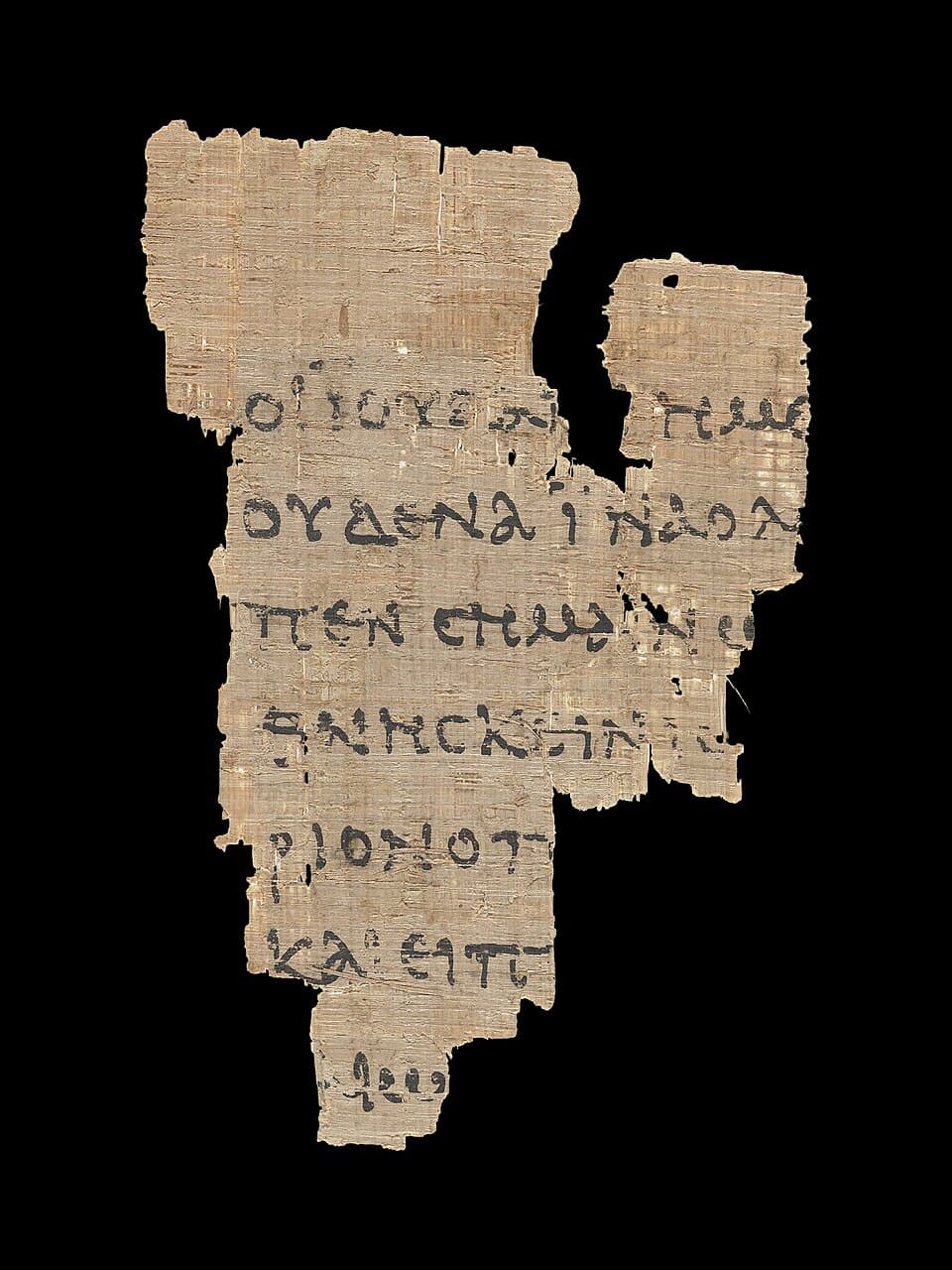
The oldest surviving scrap, which is a piece of John’s Gospel kept in Manchester, is usually dated to the early second century, within a hundred-odd years of the original.

Papyrus 52 — a small fragment of John's Gospel with Greek lettering
Papyrus 52 — the oldest known fragment of the New Testament, a scrap of John’s Gospel.
A thousand years of copying by hand
Written
c. AD 50–100
Oldest scrap
early 2nd century
Printing arrives
1450s
copied by hand
The small differences

Across all those copies there are hundreds of thousands of small differences (“variants”). Which can sound alarming, until you know that they are overwhelmingly spelling slips, word-order changes, and obvious copying mistakes.

The huge number exists because there are so many manuscripts to compare, not because the message is in flux. Scholars on both sides of the belief line, including the most prominent sceptical one, agree that the vast majority are trivial.

A couple of well-known passages (the last few verses of Mark, and the story of the woman caught in adultery in John) are widely agreed by scholars to be later additions, and most modern Bibles now flag them in a footnote.

>99%

of the New Testament text can be reconstructed with confidence — something scholars on both sides agree on.

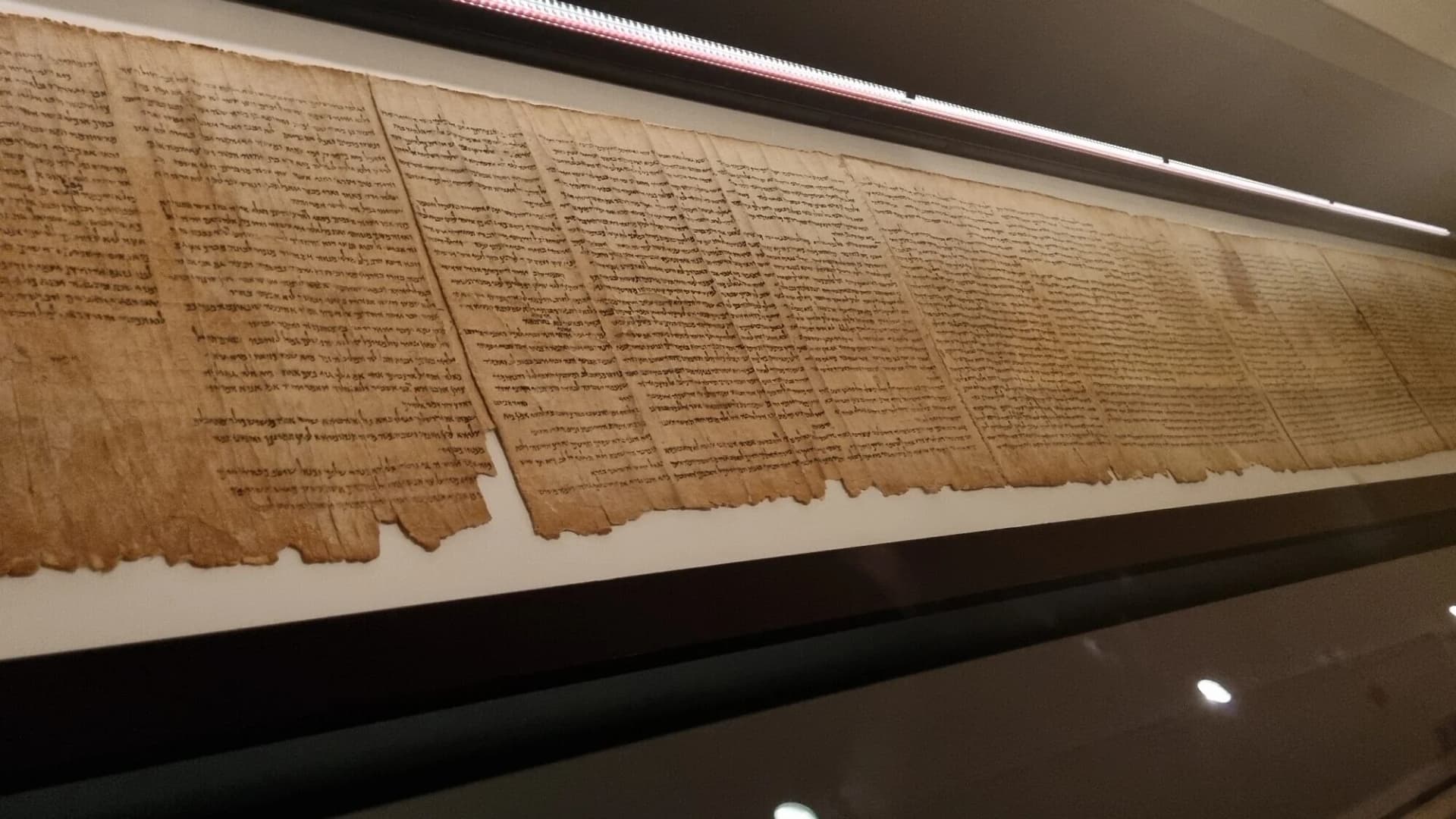
The Great Isaiah Scroll on display, columns of Hebrew text on aged parchment
The complete Isaiah scroll, found among the Dead Sea Scrolls.
And the Old Testament?

The turning point was the Dead Sea Scrolls, discovered from 1947 onwards. One of them was a complete scroll of Isaiah from around 125 BC. The crazy thing is that this was a thousand years older than our previous oldest copy.

When compared, they matched closely, so the text had been copied with remarkable (though not robotic) care across a millennium — even without all our fancy technology. That’s a pretty big miracle in its own right.

Isaiah scroll
c. 125 BC
Previous oldest copy
~1,000 years later
What this proves

The Bible you read today is, to a very high degree, what the original authors wrote.

What it doesn’t

It does not, on its own, prove those authors were right, of course. That’s a different question.

02

Do the people and places check out?

Surprisingly often, yes. Archaeology and non-Christian historians have confirmed a lot of the Bible’s backdrop.

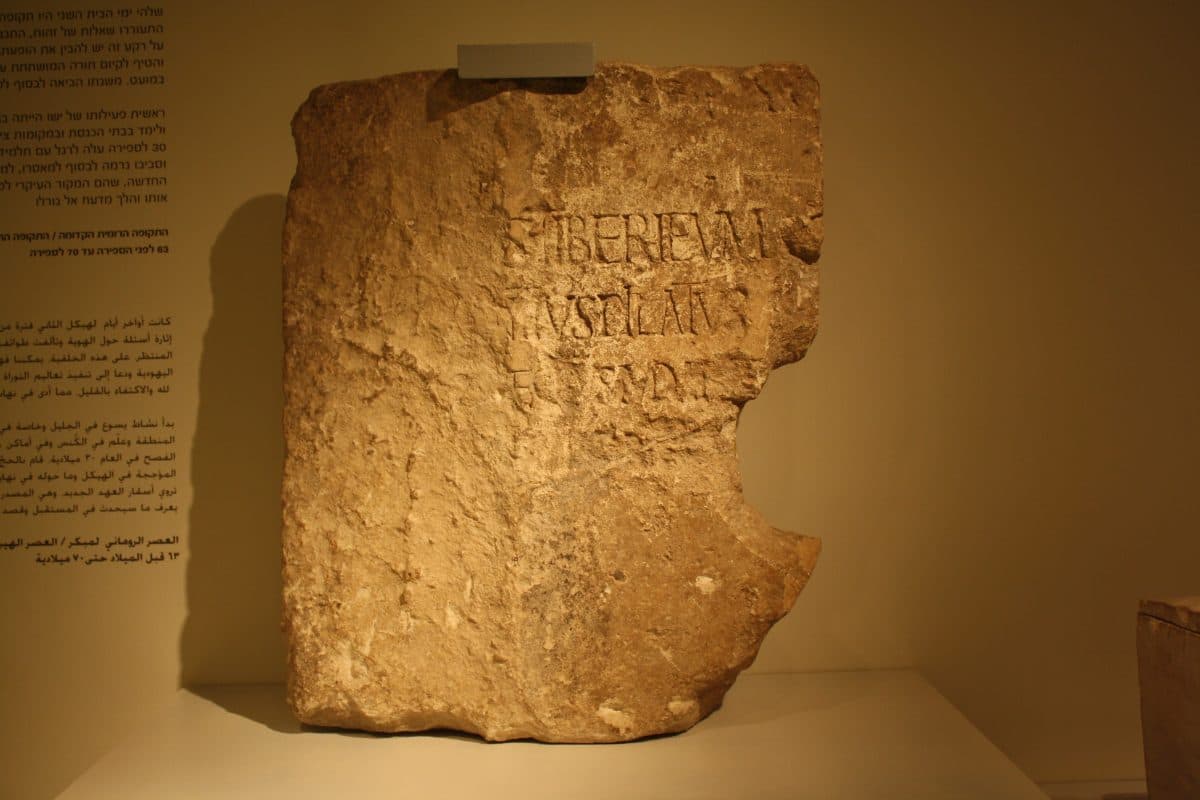
The Pilate Stone, a limestone block with a Latin inscription naming Pontius Pilate
Found 1961
The Pilate Stone

Names Pontius Pilate, the Roman governor from the Gospels — outside evidence he was a real official.

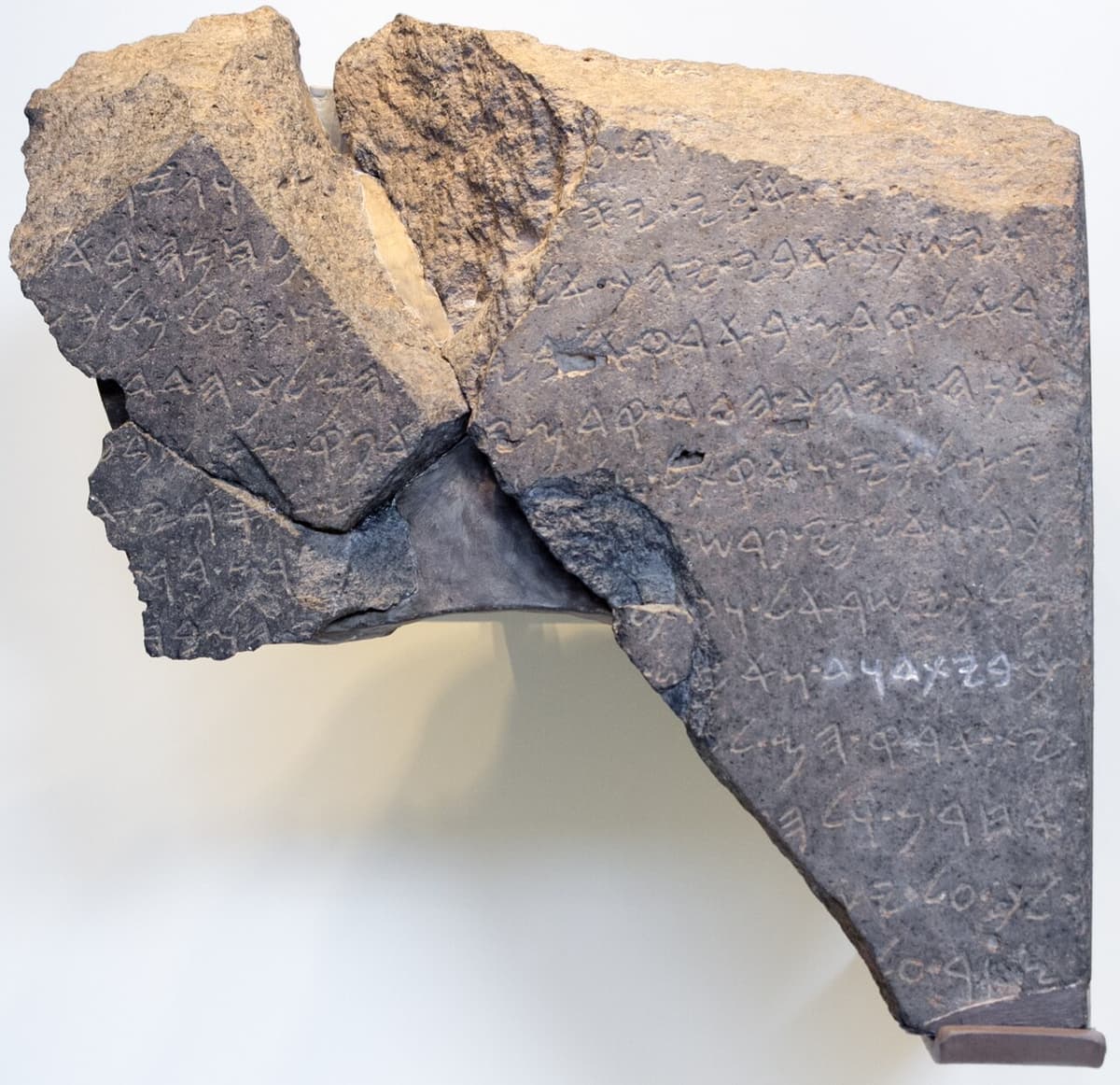
The Tel Dan stele, a broken basalt stone inscribed with “House of David”
9th century BC
“House of David”

An inscription with the earliest mention of David's dynasty outside the Bible.

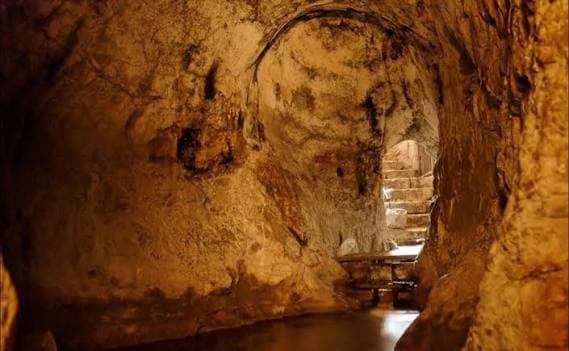
Inside Hezekiah's tunnel beneath Jerusalem, a rock-cut passage with water
Under Jerusalem
A water tunnel

With an inscription describing how it was dug — matching an event described about King Hezekiah.

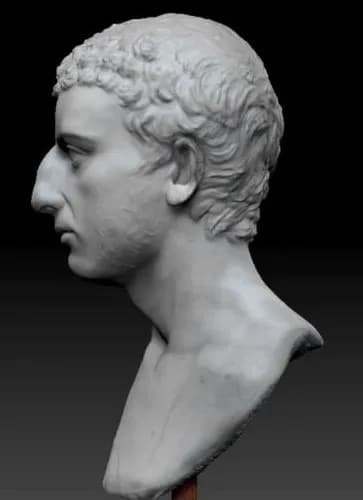
A Roman marble bust traditionally identified as Josephus
Non-Christian sources
Tacitus & Josephus

Roman and Jewish historians, neither of them Christian, record that Jesus lived and was executed under Pilate.

That’s genuinely striking for documents this old. This evidence is selective, though. Some things are confirmed, many leave no trace either way, and a few big claims are still argued over by mainstream historians.

Archaeology can tell you a person existed or an event happened. It can’t tell you what those events meant — whether Jesus rose, whether God was speaking. No stone can settle that.

03

So where does that leave you?

Actually, in a confident place — because you can check that the Bible stands up on its own two feet. It’s a text that’s reached us intact, set in a real, verifiable world. And then, at the centre, is a set of claims about God that history can point towards but can’t prove for you.

That’s where faith comes in.

What’s the Bible story actually about?

Sixty-six books can feel like fragments until you spot the throughline. Most people summarise the Bible’s big story in four movements.

01
Creation

God makes a good world, and makes people to know him and look after it.

02
The fracture

Humanity turns away, and that break damages everything, including our relationship with God, with each other, with the world. This is the Bible's diagnosis of why things are so obviously not as they should be.

03
The rescue

God refuses to walk away. He starts a long recovery plan, through one family, one people, and centuries of promises. All of these point towards Jesus, whose life, death and resurrection deal with the fracture at its root.

04
The renewal

The story doesn't end with escape from the world, but with the world put right: everything healed, everything made new.

In one sentence

A good world gone wrong, a God who won’t abandon it, a rescue centred on Jesus, and a promised future where everything is finally restored.
How to find your way around the Bible

Understanding chapter and verse.

Bible references look like a secret code. They’re not. Hover or tap each part of the famous one.

John
The book
3:
The chapter
16
The verse

The book. The chapter. The verse. That's all a reference is.

So it means: the book of John, chapter 3, verse 16.That’s it. Every Bible, in any translation, uses the same numbering, so you can find the exact same sentence in seconds.

Here’s a fact that surprises people: those numbers weren’t in the original writings. They’re a filing system laid over the text to help us find things and not part of the original.

Originally
Flowing text. No chapters, no verses.
~800 years ago
Chapter divisions added by an English scholar.
~500 years ago
Verse numbers added by a French printer.

Different writing styles.

Remember the library idea? The Bible contains several different types of writing, and knowing which one you’re in saves a lot of confusion.

Story / history

Accounts of people and events.

Try Genesis, Acts
Law

Instructions for how Israel was to live.

Try Exodus, Leviticus
Poetry

Songs and prayers, full of emotion and imagery.

Try Psalms
Wisdom

Reflection on how to live, and life's hardest questions.

Try Proverbs, Job
Prophecy

Messages delivered through the prophets — warning and hope.

Try Isaiah, Amos
Gospel

The life and teaching of Jesus.

Try Mark, John
Letters

Actual letters to early churches and individuals.

Try Romans, Philippians
Apocalyptic

Big, symbolic visions of God's final victory.

Try Revelation

Don’t read poetry like a manual, or a letter like a legal code.

A psalm is someone pouring their heart out. A letter is one side of a real conversation. Read them for what they are.

Didn’t the church just pick these books?

The story you might have heard

Some council, or the Emperor Constantine, sat down and voted on which books got in the Bible — the version made famous by The Da Vinci Code.

It’s a great story. It just isn’t what happened.

What actually happened

There was no single meeting where the Bible was invented. The Council of Nicaea (AD 325), often blamed for it, was about something else entirely and never drew up a book list.

It was slower and much less dramatic. The early churches were already reading, teaching and treating certain writings as authoritative, like the ones tied to the apostles and consistent with the faith they’d received. Over roughly three centuries that widespread agreement was simply recognised and eventually written down.

The books were acknowledged, not chosen from a hat.

Which translation should I get?

Walk into a bookshop and you’ll face an alphabet soup. NIV, ESV, NLT, KJV and The Message are some of the most common, and you can easily wonder which one is the “real” one. Good news: they’re all real. They just make different trade-offs.

Every English Bible is translated from ancient Hebrew, Aramaic and Greek, and there’s no single perfect way to do that. Translations sit on a spectrum. Tap one to see the same verse.

Word-for-wordThought-for-thoughtParaphrase
John 3:16 · NIV

“For God so loved the world that he gave his one and only Son, that whoever believes in him shall not perish but have eternal life.”

Thought-for-thought

Renders the meaning in natural English. Smooth and easy, and makes some small interpretive calls for you.

The key thing: these aren’t rival Bibles telling different stories. They’re translated from the same manuscripts and share the same message.

Never read the Bible before? Any of these is a great start.

NLTEasiest to read

If you just want to pick it up and keep going, start here.

NIVMost popular

The world's most popular modern version, and the one you're most likely to hear read aloud in a UK church — handy if you'll be following along.

ESVA bit more depth

A touch more precise than the NLT while still reading smoothly, if you want a bit more depth from day one.

Skip for now

The Passion Translation (TPT) is popular online but is essentially one person’s reworking, adds wording that isn’t in the original manuscripts, and has been dropped by some major Bible platforms. Reads more like a devotional than a reliable translation — best avoided as your main one.

Right — how do I actually start?

The number one reason people give up is that they open at page one (Genesis) and set out to read it front-to-back like a novel. A few weeks in they hit chapter after chapter of ancient laws, lose the thread, and quickly stop.

Don’t do that. Try this instead.

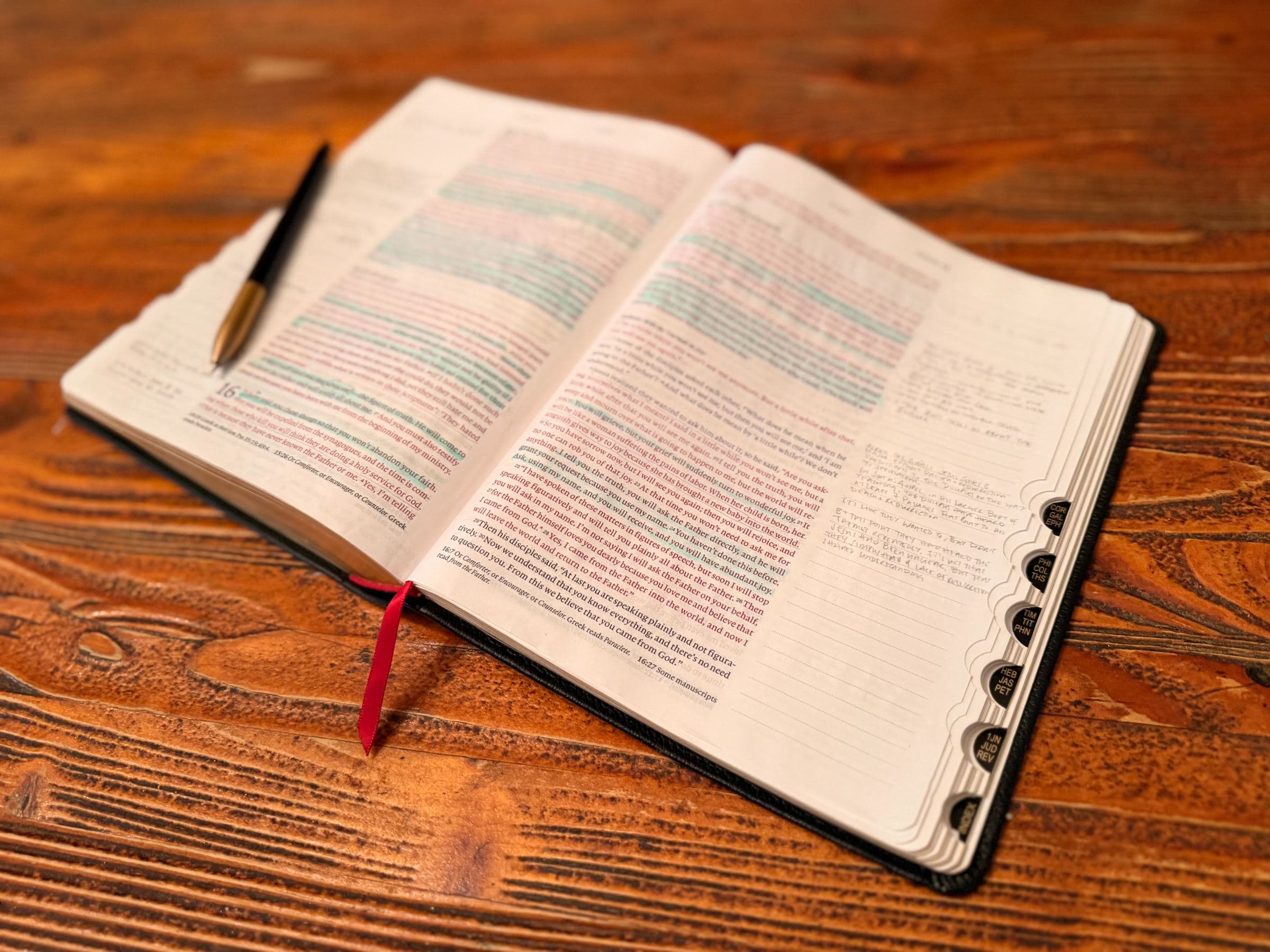
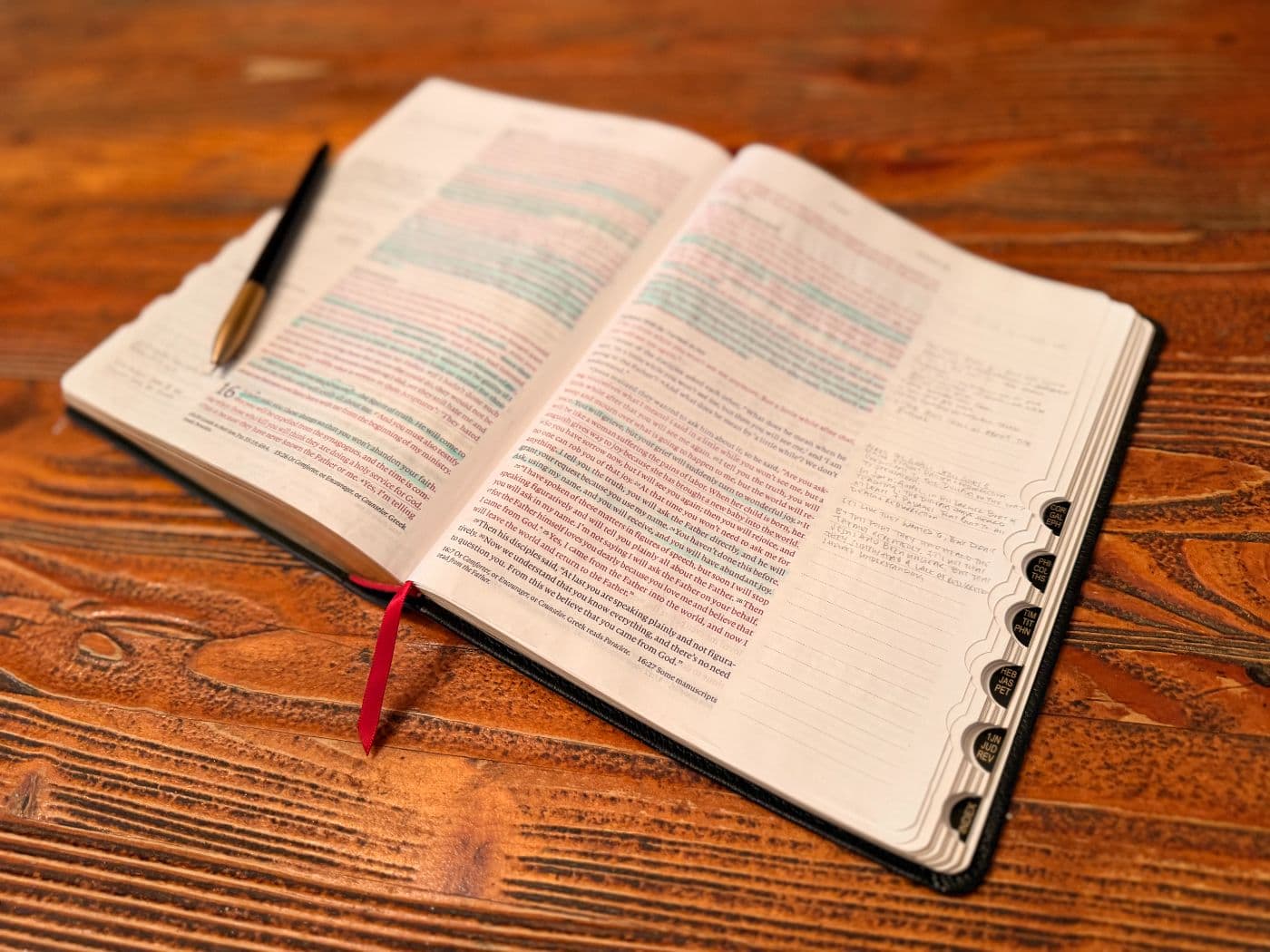
An open Bible on a wooden table, marked up with highlighter and handwritten notes
01
Start with a Gospel

An account of Jesus, who’s the centre of the whole thing.

Mark

The shortest and fastest-paced. A brisk place to begin.

John

The most reflective, and a lot of people’s favourite first book.

02
Then dip into the Psalms

150 poems and prayers covering every human emotion: joy, grief, anger, gratitude. Read a few at a time.

03
Go small and regular

Five or ten minutes most days beats an occasional marathon. You’ll remember far more.

Free tools worth knowing.

A few honest FAQs.

It's a library of 66 books by 40-odd authors across a thousand-plus years, so yes, you'll find different emphases, different perspectives, and details that take work to line up — much like four people describing the same event. Whether those amount to genuine contradictions or differences of vantage point is exactly the kind of thing worth reading and deciding for yourself, rather than taking anyone's word for.